
Buying silage bale wrap in Wales: agree the collection route first
A buying checklist for Welsh farms: verify used silage wrap collection, test a real handover and compare costs before ordering seasonal film.
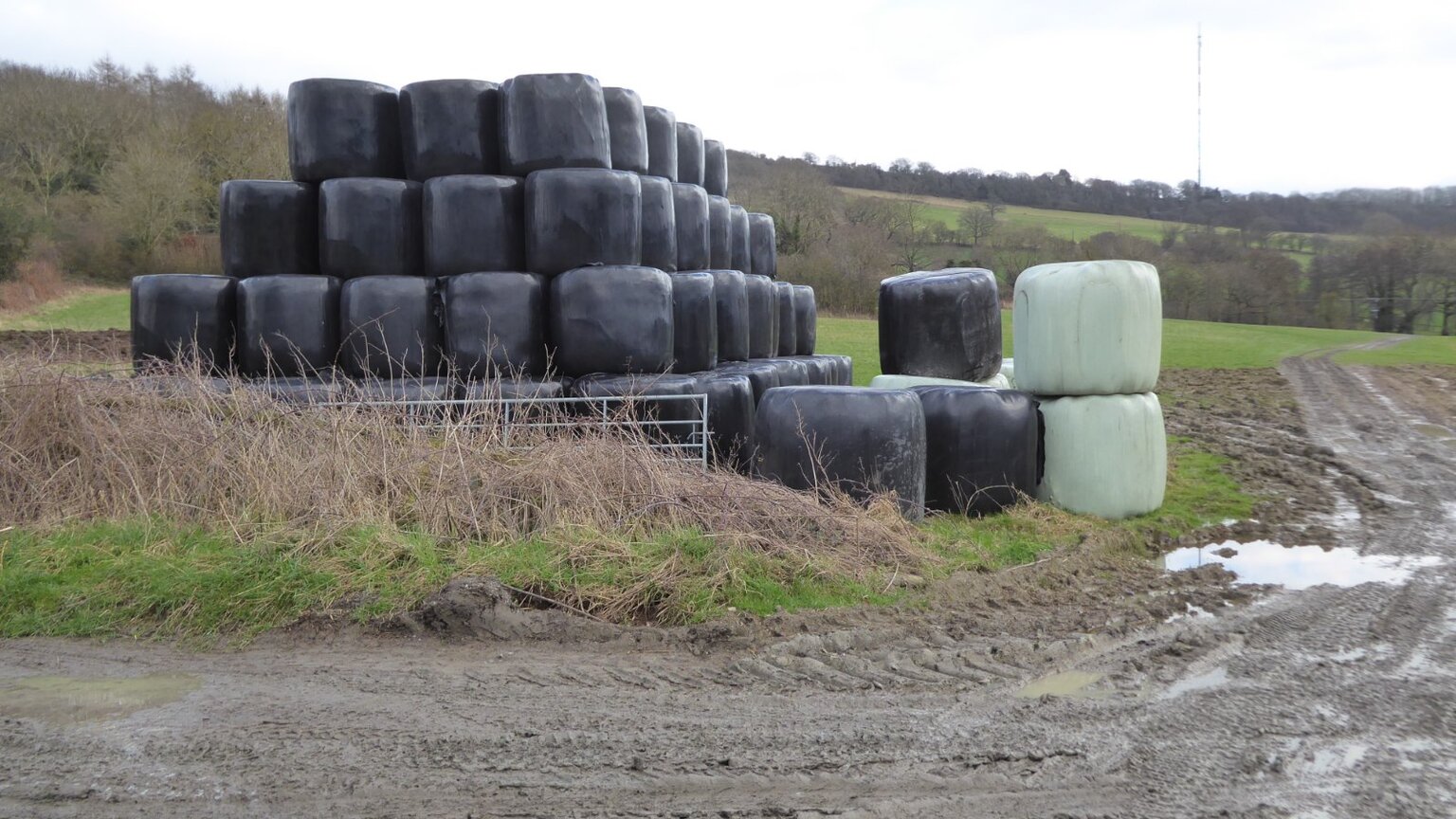
Photo: Philip Halling
Philip Halling · Wikimedia Commons · CC BY-SA 2.0 · Silage bales, Woolhope, England (illustrative). Cropped and resized; the adapted photograph is licensed CC BY-SA 2.0.
A reel can run cleanly on the wrapper and still leave the farm with a load that the collector will not take. Once a bale is opened, the outer wrap may be mixed with net or twine, dragged through mud or left in an uncovered bay. By collection day, even a good purchase can mean extra sorting, a return trip or a separate disposal bill. For Welsh dairy and livestock farms, contractors and merchants, agree how the used film will be accepted before placing the seasonal order.
This guide covers outer stretch wrap for silage bales. It addresses what happens after feeding, alongside the separate job of specifying a film that protects the forage.
Confirm the collection route for your holding
In May 2026, Natural Resources Wales reported that the Four Rivers for LIFE farm plastics scheme had collected 311 tonnes of agricultural plastic between July and December 2025, and announced an extension through December 2026. The total covers agricultural plastics, not just silage wrap. The published list includes silage bale wrap of all colours, but the initiative serves eligible holdings in its project area. Ask the operator whether your farm can use it and what service is available for your next collection, especially for wrap likely to be removed after the announced extension ends. NFU Cymru also advises farmers to sort materials and check collection arrangements with the operator. [1, 2]
BSI’s September 2026 publication of BS EN 18109:2025, incorporating the 2026 corrigendum, covers use, removal, sorting, collection and preparation for recycling of specified agricultural plastics, including bale wrap. It provides a useful framework for writing your instructions. The operator’s acceptance rules still determine whether a particular load will be taken. For example, FarmXS asks customers to separate streams and says it will not collect plastics with significant water, dirt, mud or dung. [3, 4]
Put two sign-offs on the purchase
- Film performance: Give the supplier the wrapper model, bale shape, current reel width, length, core and nominal thickness. Request the technical data sheet, batch identification, applicable tolerances and the agreed evidence for mechanical performance and oxygen transmission. Run the candidate beside your approved reference at the same wrapper settings and layer count where both suppliers and the machine maker permit. Record film breaks and incomplete coverage, and inspect bales again during handling and at opening. Do not reduce layers on the strength of a collection claim.
- Used-wrap acceptance: Ask the collector to confirm in writing the film stream, colour rules, what must be kept separate, how clean and dry the load must be, and the required bags or containers, minimum quantity and collection charges. Confirm how the load is weighed and what happens if part of it is refused. Keep the outer wrap separate from twine, netting, sheet and inner tying film unless the operator explicitly allows that combination. Agree who sorts it when the bale is opened and who pays to re-sort a rejected load.
Treat recycled content as a separate claim. Trioworld, for example, identifies used silage wrap as the source of post-consumer recycled (PCR) polymer in its own Loop range. That illustrates one documented supply chain; it does not show that a particular Welsh load will return to bale wrap or that any Nexis film contains PCR. If recycled content is part of your purchase, request product-specific evidence for the claimed percentage and its basis. A collection receipt records a handover; ask for separate downstream evidence if you intend to report recycling or a closed loop. [5]
Test one real handover before scaling up
- At bale opening: label a dedicated covered container with the collector’s accepted stream. Store it off muddy ground and away from runoff. Record the number of bales opened and keep samples from each film trial identifiable. Remove loose forage and obvious contaminants as the operator directs.
- Before uplift or drop-off: photograph the prepared load. Where practical, weigh it with and without the container, or record the collector’s net weight and weighing basis. Keep accepted and refused quantities separate. Wet, dirty wrap weighs more; do not use gross collected weight as a measure of clean polymer recovered.
- At handover: obtain the collection record, the accepted weight if available, and the reason for any rejection. Fix the identified issue and agree a repeat check before changing the specification across the holding or contractor’s customer base.
Compare the two options on the same basis: add the delivered cost of film used, preparation labour, collection and any re-sorting or alternative handling costs, then divide by the number of wrapped bales accepted for use at opening under the same inspection rules. Record film breaks and bale losses alongside that figure. Keep the dry-storage and collection assumptions visible so the price comparison can be repeated when a scheme or tariff changes. If the farm and contractor share the work, put that split in the quotation.
For a technical data sheet, trial reel or quote from Nexis, send your wrapper model, bale shape, current reel dimensions, expected bale count, delivery postcode and your collector’s written sorting rules. If you need a particular film colour or documented recycled content, specify it in the enquiry so availability and supporting documents can be checked for the offered film.
Nexis silage stretch film: https://www.nexisplast.com/en/products/silage-stretch-film
Request specifications or a quote: https://www.nexisplast.com/en/contact
Sources
[1] Natural Resources Wales, Four Rivers for LIFE farm plastic scheme extension, 20 May 2026: https://naturalresources.wales/about-us/news-and-blogs/news/4r4l-farm-plastic-scheme-extended/?lang=en
[2] NFU Cymru, guidance on sorting and collection arrangements for farm plastics, 14 September 2026: https://www.nfu-cymru.org.uk/news-and-information/pay-less-to-recycle-your-agri-plastics/
[3] BSI, BS EN 18109:2025, UK publication dated 30 September 2026, incorporating EN 18109:2025/AC:2026: https://knowledge.bsigroup.com/products/plastics-agricultural-plastic-products-installation-use-removal-sorting-collection-preparation-for-recycling-and-design-for-recycling-guidelines-1
[4] FarmXS, published farm-plastic acceptance and preparation rules, accessed 13 November 2026: https://farmxs.com/?page_id=1010
[5] Trioworld, bale wrap technical information and stated source of PCR in its Loop range, accessed 13 November 2026: https://www.trioworld.com/products/agriculture-horticulture-film/bale-wrap-mantle-film/bale-wrap/