
FFS film for resin exports: approve the bag on the filling line
A practical acceptance plan for polymer producers comparing FFS film, bag integrity and total packing cost.
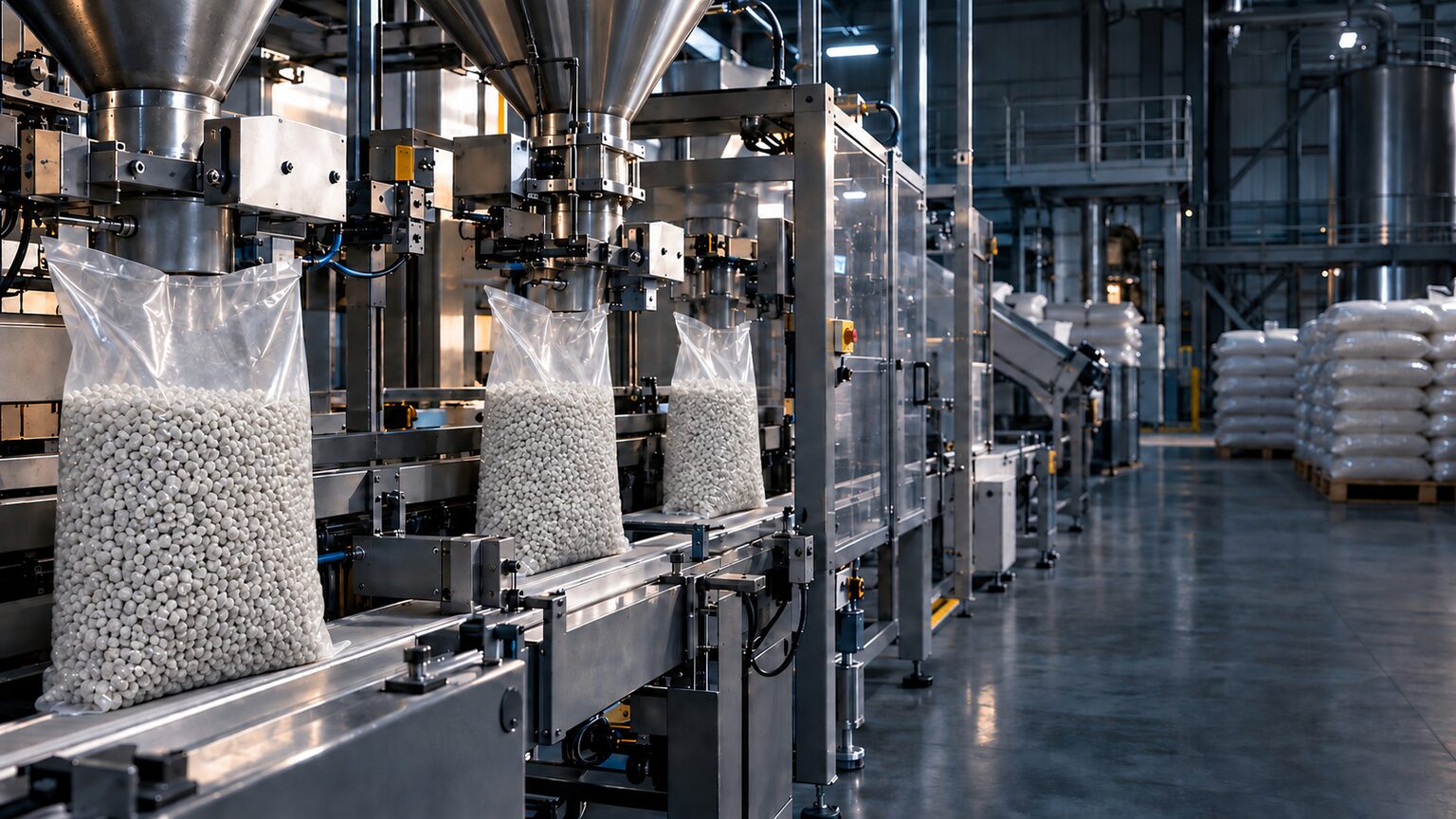
A roll of FFS film is only useful if it becomes a consistently filled, sealed and transportable bag on the buyer's equipment. For polymer granules, the line, bag and pallet form one system. A purchase specification should therefore begin with the filling operation and the export route.
Define the operating window
Give the supplier the FFS machine model, film format, reel width and diameter, core dimensions, target fill weight, line speed and sealing cycle. Explain whether the bag is printed and how it is stacked. A film that runs well at a demonstration speed may still create jams or weak seams at the production setting.
Test the finished bag
Agree on seam integrity after cooling, bag dimensions, appearance, leakage, drop and handling tests appropriate to the actual product. Check whether fine polymer dust contaminates the sealing zone. Measure film breaks, rejected bags, cleaning interruptions and throughput during a representative trial, then repeat on a second commercial lot.
Compare delivered cost
Cost per kilogram of film ignores changes in bag rejection and filling-line speed. Compare cost per accepted bag at the agreed weight, including downtime and damaged pallets. State the Incoterm, delivery point and batch documents on each quotation so offers have a common basis.
Send a useful RFQ
- Machine and bag drawings, target fill weight and product characteristics.
- Current film structure and the reason a change is being considered.
- Required seam, stacking, print and storage performance.
- Monthly volume, destination, trial quantity and acceptance limits.
Nexis can review a proposed FFS film against this brief and coordinate a sample and export quotation. Share the line data and destination with the commercial team; final approval should follow a trial on your own equipment.